How Rain Sensors Work


Rain Sensors
Rain sensors are not a single device class. Tipping-bucket, siphon, infrared optical, and piezoelectric designs rely on different physical effects. In this article, we review how each type works, how electronics read the signal, what data you can trust, and which option fits IoT field systems.
Tipping Bucket Rain Gauge
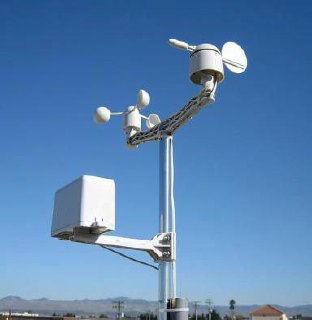
Operating Principle
A funnel collects rain into a dual-bucket mechanism. Each tip represents a fixed volume, so rainfall total is computed from pulse count.
Electronic Readout
Typical detection uses reed switch or Hall-effect sensor. Key design topic is clean pulse shaping (debounce, Schmitt trigger, EMI protection for long cables).
Data You Get
- Time-stamped pulses
- Accumulated rainfall (mm)
- Derived intensity from inter-pulse timing
IoT Suitability
Excellent for low-power remote nodes. Mechanically robust design and periodic field maintenance are still required.
Siphon Rain Gauge
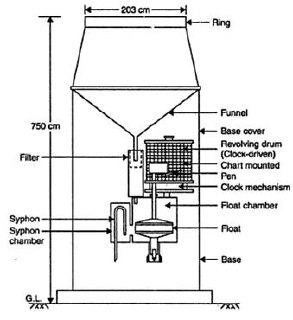
Operating Principle
Water level rises in a chamber, then siphon discharge resets the cycle. This enables level-vs-time behavior, not only discrete events.
Electronic Readout
Float position can be converted with Hall array, linear displacement sensing, or encoder-like methods; requires ADC + filtering + event interpretation.
Data You Get
Richer time-series behavior than tipping bucket, but requires stronger calibration and more complex firmware.
IoT Suitability
Possible, but typically heavier and more complex than pulse-based solutions for field deployments.
Infrared Optical Rain Sensor
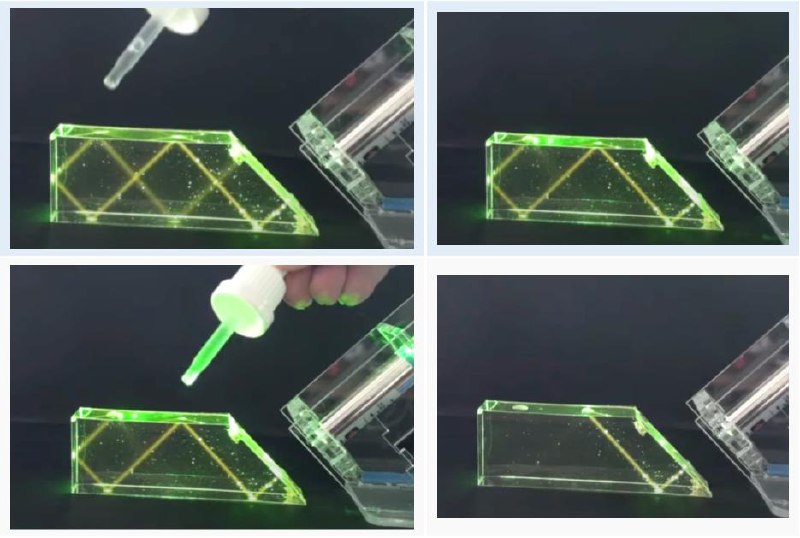
Operating Principle
Raindrops change reflection/refraction on an optical surface, reducing received IR light.
Electronic Readout
IR LED + photodiode/phototransistor, usually with modulation and filtering for sunlight/noise immunity.
Data You Get
Strong rain/no-rain detection and relative wetness. Not a direct mm rainfall measurement by itself.
IoT Suitability
Great for fast event detection (e.g., rain-start trigger), best paired with a quantitative gauge.
Piezoelectric Rain Sensor
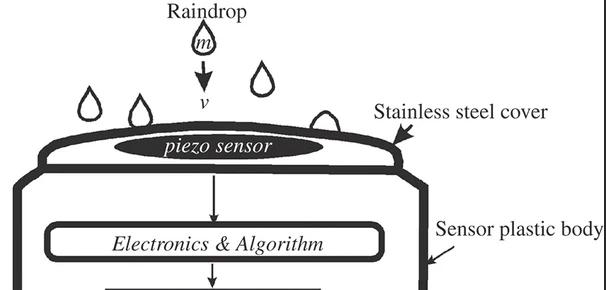
Operating Principle
Raindrop impacts create mechanical stress, converted into electrical pulses by a piezo element.
Electronic Readout
Needs high-impedance analog front-end, protection, filtering, and robust signal interpretation to reject false events.
Data You Get
Potentially rich: impact counts, amplitude, event density, and derived rain behavior—if calibrated well.
IoT Suitability
Powerful for advanced analytics, but requires careful analog and algorithm design.
Engineering Comparison
- Tipping bucket: simplest digital architecture, best all-around for quantity
- Siphon: richer analog profile, higher complexity
- Infrared: excellent detection, limited direct quantity
- Piezo: high potential, high DSP/AFE complexity
IoT Recommendation
For practical agricultural IoT, a hybrid design is often best:
- Quantitative measurement: tipping bucket
- Fast event confirmation: optical (or piezo in advanced systems)
This improves reliability for control actions (e.g., irrigation stop) while retaining trustworthy accumulation data.
Conclusion
There is no universal “best rain sensor.” The right choice depends on application target, required output type, electronics complexity, maintenance profile, and field conditions. In real products, system architecture and signal processing quality usually matter more than sensor type alone.